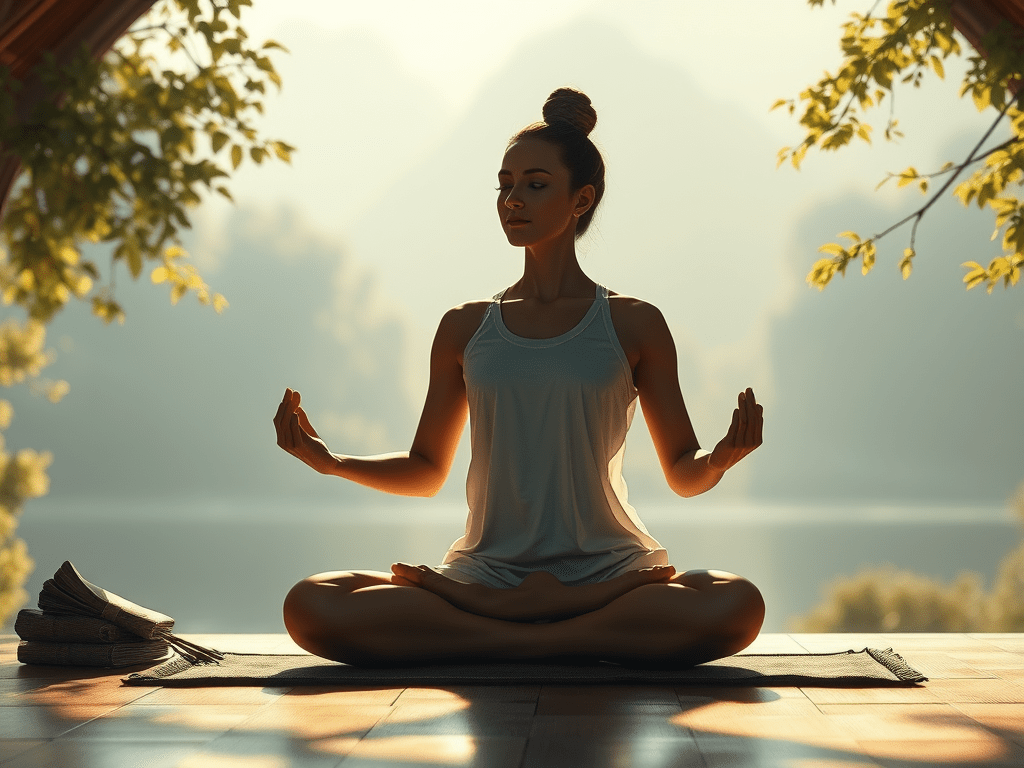
If the first chapter of the Yoga Sūtras, Samādhi Pāda, is about the goal of yoga—stilling the mind and reaching deep meditative states—then the second chapter, Sādhana Pāda, is about the how.
It answers the question:
✨ How do I start practicing yoga in daily life?
Let’s break it down into simple, practical ideas from this powerful chapter.
🛤️ What Is Sādhana?
Sādhana means disciplined practice—the regular effort we make to transform the mind and purify our inner world.
This chapter gives us:
- A clear path to follow
- Tools to remove suffering
- Guidance on how to live and grow spiritually
🔥 Step 1: Kriyā Yoga – The Yoga of Action
Patañjali opens this chapter by introducing Kriyā Yoga, a simple but powerful trio of practices:
“Tapas svādhyāya īśvara-praṇidhānāni kriyā-yogaḥ” (II.1)
“Discipline, self-study, and surrender to God make up the yoga of action.”
These three are:
- Tapas – Effort, self-discipline, and going through necessary challenges
- Svādhyāya – Study of spiritual texts and self-reflection
- Īśvara Praṇidhāna – Surrendering the fruits of your actions to a higher power
Together, they help purify the mind and reduce suffering.
🧠 The Root of Suffering: The Five Kleshas
Why do we suffer? According to Patanjali, the cause lies in five mental afflictions, called kleshas:
II.3 — Avidyā-asmitā-rāga-dveṣa-abhiniveśāḥ kleśāḥ
- Avidyā – Ignorance of our true nature
- Asmitā – Egoism; identifying with the mind/body
- Rāga – Attachment to pleasure
- Dveṣa – Aversion to pain
- Abhiniveśa – Fear of death or clinging to life
These are the root of all karma and mental disturbances. The practice of yoga is meant to weaken and eventually eliminate them.
🔄 Karma and Its Effects
Patañjali explains how the kleshas lead to karma—the storehouse of past actions—which shapes our future experiences.
II.12 — “Kleśa-mūlaḥ karma-aśayo…”
Karma is rooted in the kleshas and leads to birth, lifespan, and life’s joys and sorrows.
But there’s good news:
Through yoga, we can stop creating new karma and begin to dissolve the old.
🌿 The Eight Limbs of Yoga (Aṣṭāṅga Yoga)
One of the most important teachings in Sādhana Pāda is the path of Aṣṭāṅga Yoga—the eight-limbed path to freedom.
II.29 — “Yama-niyama-āsana-prāṇāyāma-pratyāhāra-dhāraṇā-dhyāna-samādhi aṣṭāvaṅga”
The 8 Limbs Are:
1. Yama – Ethical restraints
- Ahimsā (Non-violence)
- Satya (Truthfulness)
- Asteya (Non-stealing)
- Brahmacharya (Moderation / control of desires)
- Aparigraha (Non-possessiveness)
2. Niyama – Personal observances
- Śauca (Purity)
- Santoṣa (Contentment)
- Tapas (Discipline)
- Svādhyāya (Study of the self and scriptures)
- Īśvara-praṇidhāna (Surrender to God)
3. Āsana – Physical posture
Not about complex poses, but finding a posture that is “stable and comfortable.” (II.46)
4. Prāṇāyāma – Control of breath
Breath control helps steady the mind and prepare it for meditation.
5. Pratyāhāra – Withdrawal of senses
Turning attention inward, away from distractions
6. Dhāraṇā – Concentration
Fixing the mind on one point
7. Dhyāna – Meditation
A steady flow of awareness toward the object of meditation
8. Samādhi – Absorption
The final state where the meditator merges with the object of meditation
This step-by-step path leads to inner freedom and self-realization.
🎯 The Purpose of Practice
The ultimate goal, according to Sādhana Pāda, is to reach a state where the mind no longer interferes with our true self.
As we weaken the kleshas, reduce karma, and follow the eight limbs, the mind becomes clear and still. Eventually, we experience kaivalya—pure freedom and liberation.
🧘♂️ In Simple Terms:
- Yoga is a journey from mental noise to inner stillness
- The cause of suffering is ignorance and ego, not the world outside
- Practice means discipline, self-inquiry, and surrender
- The eight limbs of yoga give us a complete roadmap to transformation
🌼 Final Thought
The second chapter of the Yoga Sūtras, Sādhana Pāda, is a practical guide for anyone—no matter your background. It tells us:
You don’t need to escape the world to practice yoga.
You just need to begin, right where you are.
Whether through daily kindness, sitting in stillness, or observing your breath, every small act becomes part of the greater journey inward.
 memajuve
Leave a comment