I’ve been sitting with a question that came out of my last meditation, and it won’t leave me alone:
How does one observe things fresh — in the moment — without the inference of the same room, the same neighborhood, the same life?
How can I increase the gap between raw observation and inference, so I can sit with stillness without the discomfort to interpret it?
It sounds like a simple question. It isn’t. It might be one of the hardest things a human being can attempt. Because what I’m really asking is: how do I slow down a process that happens almost instantaneously — one that my brain has been doing automatically for decades?
The Model That Replaced the Room
The reason my room feels stale is because my mind has already completed its observation of it. It saw the room once — maybe years ago — built a model, and now every time I walk in, it projects that model instead of actually looking. The brain is efficient that way. It’s how we survive. But it’s also how we stop seeing.
I realized I’m working against biology. The brain is an inference machine. Its entire evolutionary purpose is to move from observation to conclusion as fast as possible. In survival terms, the gap between seeing the tiger and interpreting “danger” needed to be zero. I’m asking that gap to widen. That’s not a small thing.
I Already Know What Freshness Feels Like
Here’s what caught me off guard — I already know what fresh observation feels like. I’ve felt it.
When I watch a Naruto arc for the first time and something unexpected happens, there’s a split second where I’m just in it. Before my mind starts analyzing the writing, comparing it to previous arcs, forming opinions. That fraction of a moment — that’s the gap. It exists.
The question is whether I can cultivate it outside of novelty.
And that’s the real trap I’ve been living in — the belief that freshness requires new stimuli. That I need something I haven’t seen before in order to observe without inference. My meditation revealed this exactly. I asked what feels new and fresh, found nothing, and the mind immediately labeled that as disappointing.
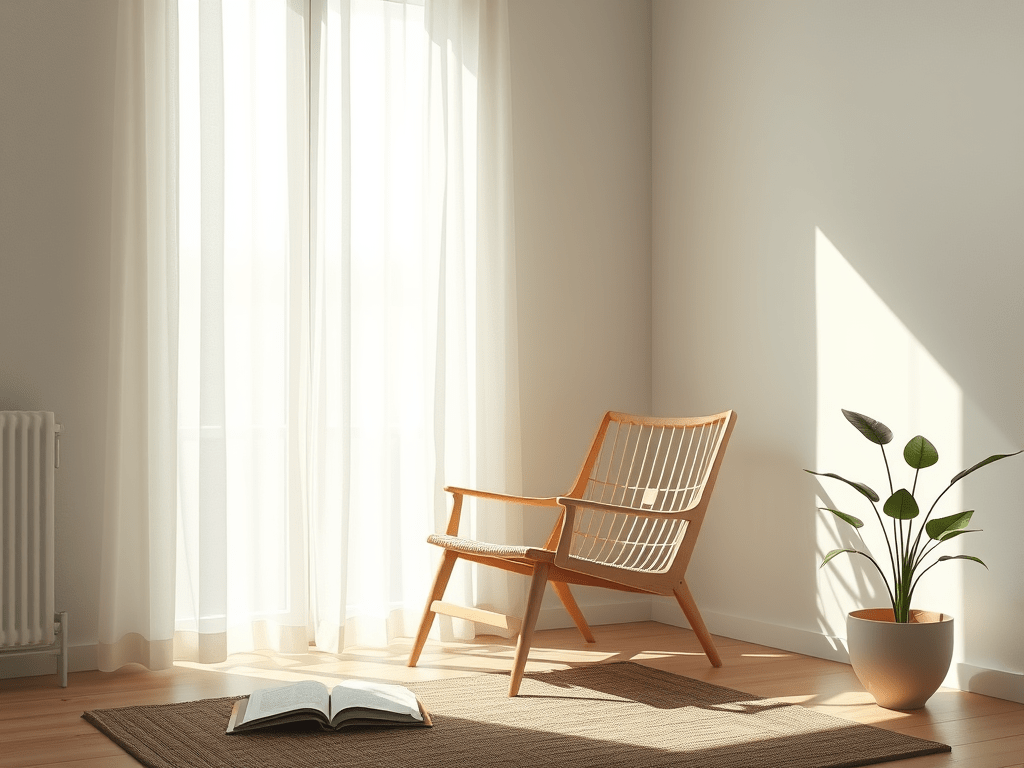
But the room I was sitting in, the breath moving through me, the light hitting the wall — all of that was actually happening for the first and only time in exactly that configuration. It was new. The mind just refused to see it that way because it had already filed those things under “known.”
Recognition Is Not Observation
I think this is the shift that matters. Not a technique. Not a practice. An understanding.
When I walk into my room and my mind says “same room,” that’s recognition — pattern matching against memory. Observation would be seeing the room as if the label “my room” didn’t exist. Not pretending it doesn’t exist, which is just a mental game, but genuinely noticing what’s actually in front of me beneath the label.
The mind labels fast. The label replaces the thing. I stop seeing the thing.
But if I can notice the moment of labeling — not stop it, just notice it — that noticing itself is the gap.
The Discomfort Is Not the Obstacle
I wanted to sit with stillness without the discomfort of needing to interpret. But I’m starting to think I had that backwards.
The urge to interpret isn’t just a habit. It’s a form of security. Sitting with raw observation and no conclusion feels like floating with nothing to hold onto. The mind interprets because meaning feels like solid ground.
“This is boring” is more comfortable than the unnameable experience of just being in a room.
“I feel nothing” is more comfortable than the actual texture of what’s present before I call it nothing.
So the discomfort isn’t an obstacle to the practice — it is the practice. Every time I notice the urge to name, to conclude, to interpret, and I stay with what’s there for even two more seconds before the label lands — that’s the gap widening. Not through effort or discipline, but through interest. Genuine curiosity about what exists before the mind tells me what it is.
The Question That Stays
I asked how to sit with stillness without discomfort. But maybe the discomfort doesn’t go away. Maybe my relationship with it changes. It stops being a problem to solve and starts being something I get curious about.
Why does my mind need to name this so urgently?
That question — asked without needing an answer — might be worth more than ten minutes of trying to observe without inference.
I started this blog asking what love is. Then I mapped out how experience becomes inference. Now I’m here, staring at the most basic thing: can I see what’s in front of me without telling myself what it is?
I think this is what meditation today has been about all along. I just didn’t see it until now.
Maybe that’s the point.
 memajuve
Leave a comment